

Choosing a supplement often feels like a gamble when you can’t verify what’s actually inside the capsule. For South Africans managing metabolic dysfunction, chronic stress or poor sleep, the stakes are higher than general wellness, because the outcome you’re after depends on ingredient potency and how well your body can actually use it. South African made supplements vs imported options isn’t just a question of supporting local industry. It comes down to regulatory oversight, supply chain integrity and whether the label tells you the truth.
We built My World in Balance to close the gaps we kept seeing in imported supplements: proprietary blends that hide real dose sizes, and logistics chains that quietly degrade what’s inside the bottle. This article breaks down the real differences between locally manufactured and imported products, so you can judge your options on evidence rather than marketing.
The Regulatory Gap: SAHPRA Oversight vs International Standards
Regulation sets the baseline safety and quality you can expect from any health product. But the level of scrutiny varies a lot depending on where a supplement is made. Supplements manufactured in South Africa fall under SAHPRA’s domestic rules, which require Good Manufacturing Practice compliance and regular facility inspections. That creates a closed loop of accountability imports simply don’t have. Buy a locally produced product and you’re buying something that sits inside a legal framework built for our market and our enforcement capability.
Imported supplements arrive through different channels with varying oversight, so the testing applied at the point of origin may not carry through to the bottle on your shelf. Standards differ sharply between countries. Some regions keep tight controls; others have far looser thresholds for contaminants and label accuracy. Whether imported supplements are safe doesn’t have one answer, because it depends on the specific manufacturer’s own adherence to standards South African authorities can’t directly audit or enforce.
Local manufacturing puts the producer squarely under SAHPRA’s jurisdiction, so every label claim is open to domestic verification. If something doesn’t match up, there’s a direct line of accountability that simply doesn’t exist with an overseas supplier. You get that advantage every time you choose a product formulated, manufactured and tested inside South Africa’s borders.
Supply Chain Realities: Freight, Heat and Shelf Life for Imported Stock
Botanical ingredients are biologically active, and they degrade when exposed to heat, light or moisture during transit and storage. Imported herbal supplements can spend weeks in uncontrolled shipping containers where temperatures exceed 40°C, which can degrade heat-sensitive botanicals like saffron extract before they ever reach a South African shelf. That thermal exposure is rarely disclosed on packaging, yet it decides whether the active ingredients are still at therapeutic levels by the time you take them.
Freight delays make this worse, because longer transit eats into the shelf life left for retail and actual use. A product made eighteen months ago might still sit within its printed expiry date, but the potency of volatile compounds, like essential oils or standardised extracts, keeps falling regardless of what the label promises. Local manufacturing sidesteps this because the distance between factory and pharmacy shelf is measured in kilometres, not ocean crossings.
Humidity during sea transport adds another way things can go wrong, particularly for ingredients that absorb moisture easily, such as magnesium glycinate and powdered botanicals. Moisture speeds up oxidation and can let microbes grow, even in sealed containers, if desiccants fail or packaging gets damaged along the way. Supplements made here skip these cumulative risks and keep the chemical profile formulators actually signed off on.
You deserve to know the product you take today matches the specification sheet signed at production, not a version quietly reshaped by months in transit.
Ingredient Integrity in Locally Manufactured Supplements South Africa
Raw material verification is the most important control point in supplement manufacturing, and geography decides how well it can actually be done. Local manufacturing lets formulators check raw material certificates of analysis against the physical batch samples in front of them, a step that’s often lost in multi-stage international supply chains, where paperwork travels separately from the goods. That physical check confirms the ashwagandha or berberine going into the blending vessel really has the alkaloid or withanolide concentration the supplier’s paperwork claims.
Imported finished products skip this step entirely, because the raw materials were sourced, tested and blended overseas before the product ever crossed our border. You’re left trusting that the foreign manufacturer tested properly and that their suppliers’ certificates were accurate, with no way to check it yourself. That matters a great deal for botanical medicines, where active compound levels shift naturally between harvests and need batch-specific adjustment to keep the dose consistent.
South African manufacturers working with local botanicals also have shorter supply chains and direct relationships with growers and processors who understand what our market expects. That proximity means substandard raw material gets rejected before production starts, not discovered after thousands of capsules are already filled. Your confidence in what’s in the bottle should rest on a process you can check, not distance and hope.
Transparency and Batch Traceability in SA Manufacturing
Traceability turns a quality claim into something you can actually check. Every batch of GlucoFocus and ZenSleep is independently tested for purity and potency before release, so label claims match what’s actually in the capsule, with a documented chain of custody from raw material intake to dispatch. That testing generates batch-specific certificates linking your purchase to real analytical results, not a generic assurance printed on a box.
Imported products typically carry batch numbers that point back to foreign manufacturing records South African consumers and regulators simply can’t access. If a quality concern comes up, tracing it through international distributors, freight forwarders and overseas factories brings delay and opacity that get in the way of fixing anything. Locally manufactured supplements keep full traceability in one jurisdiction, so questions about a specific batch get answered quickly, using records and testing archives that are actually here.
That transparency isn’t only about ticking regulatory boxes. It’s the relationship between us and you. We publish our testing commitments because you shouldn’t have to take supplement quality on faith. Batch traceability isn’t a premium extra; it’s the baseline for anything claiming to support metabolic or neurological health.
Formulation Philosophy: Clinically Informed Dosing vs Proprietary Blends
The amount of active ingredient in a supplement decides whether it does anything at all, or just takes up space in your routine. ZenSleep contains 570mg of Magnesium Glycinate and 600mg of Ashwagandha per serving. Those are clinically studied doses, not the vague quantities proprietary blends hide behind. That specificity lets you cross-check our formulations against published research and confirm each ingredient actually reaches the level studies have shown to work.
Proprietary blends are still common in imported supplements, because they protect a formula’s “secret” while letting manufacturers include expensive ingredients at sub-therapeutic levels, undisclosed. Knowing the difference between a proprietary blend vs labelled dose is essential if you want to judge whether a product can realistically deliver what it promises. When you can’t see individual quantities, you can’t tell if the ashwagandha matches the 600mg used in clinical trials, or is just a token amount included for the label.
Our approach to ashwagandha sourcing and dosing puts transparency first, because metabolic and sleep support needs precision, not guesswork. Clinically informed dosing costs more to produce than a proprietary blend. The alternative is paying for a product that doesn’t carry enough active compound to do anything. You’re buying a supplement for a specific outcome, and getting there means formulations built on published evidence, not marketing convenience.
For more on how the ingredients work together to support sleep, our article on herbal sleep support with saffron explains the mechanisms behind ZenSleep’s formulation.
Evaluating Your Options: GlucoFocus, ZenSleep and The Complete Balance Bundle
Turning manufacturing principles into a real choice means looking at specific products. GlucoFocus is built for blood glucose management, metabolism and healthy weight, with botanical ingredients dosed to match research rather than category convention. It supports blood sugar balance, appetite regulation and liver health together, because metabolic dysfunction rarely shows up as one isolated symptom needing one isolated fix. A single pack runs from around ZAR 599.00 up to ZAR 1399.00 for the 3-pack, or around ZAR 480.00 a month on the Subscribe & Save plan, which you can pause or cancel any time.
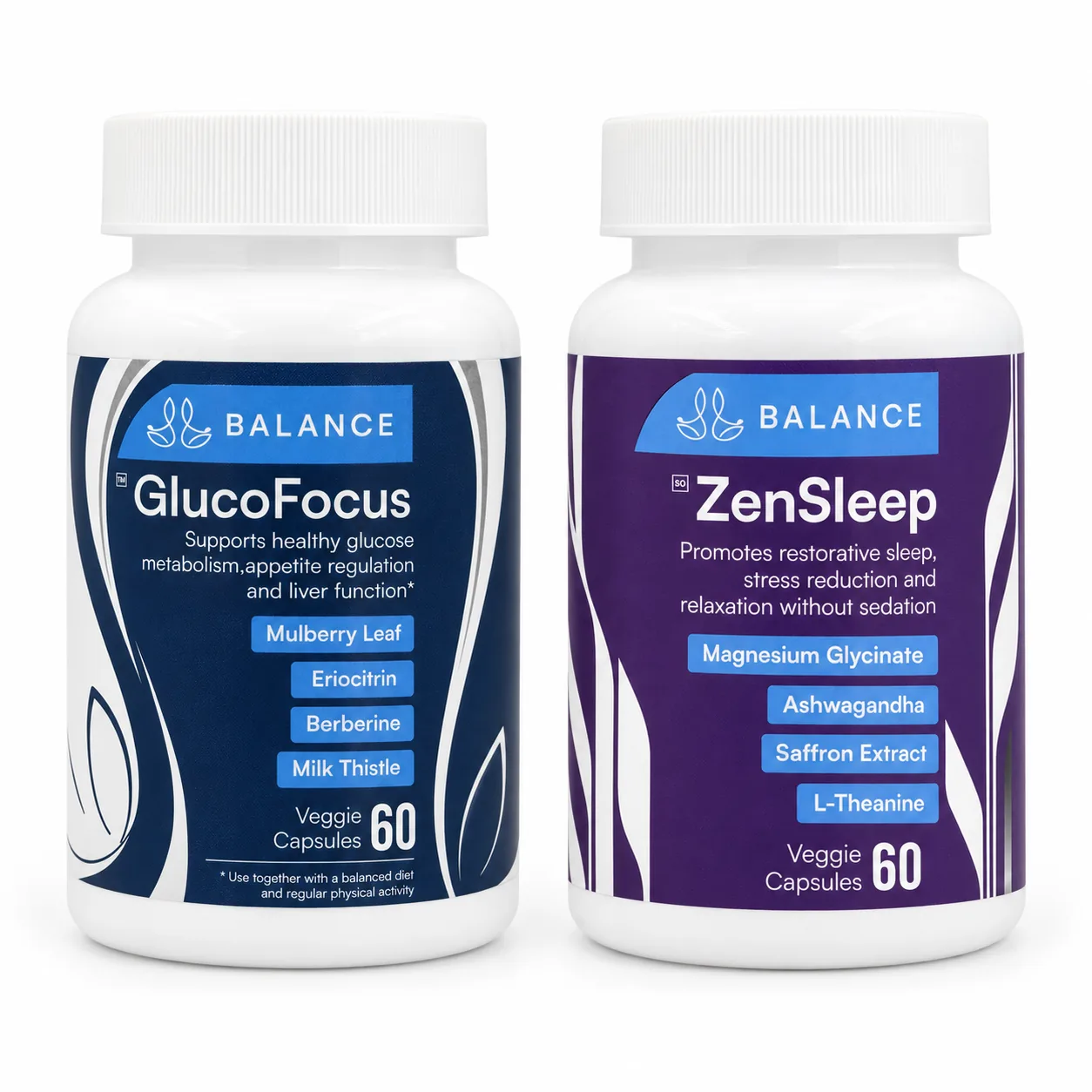
ZenSleep combines magnesium glycinate, ashwagandha, saffron extract, L-theanine, vitamin D3, vitamin B6 and zinc gluconate at the quantities sleep and stress research supports. Each serving (two capsules, taken 30 minutes before bed) delivers 56mg of saffron extract, 200mg of L-theanine and 1000IU of vitamin D3, working on several pathways to relaxation and sleep without leaning on sedative dependency. Pricing runs from around ZAR 399.00 to ZAR 999.00 depending on pack size, or around ZAR 359.00 a month via subscription.
The Complete Balance Bundle pairs both formulas into one day-and-night routine, a bottle of GlucoFocus for the day and a bottle of ZenSleep for the night, 60 capsules in each. It’s priced around ZAR 899.00, or around ZAR 799.00 a month through Subscribe & Save, for those dealing with metabolic health, sleep quality and stress together rather than one at a time.
These three products are what it looks like when south african made vs imported stops being a slogan and becomes an actual comparison of formulation decisions, manufacturing controls and testing commitments.
Making an Evidence-Based Choice for Metabolic and Sleep Health
Supplements can’t replace medical treatment for a diagnosed condition. No botanical formulation compensates for untreated sleep apnoea, unmanaged diabetes or a severe psychiatric disorder that needs pharmaceutical care. That’s the honest boundary of what supplementation can do: support physiological function within what nutrients and botanicals can realistically influence, not treat pathology that needs a clinician.
Within that boundary, though, the choice between locally manufactured and imported supplements has real consequences for potency, safety and whether the formulation is what it says it is. You now know how SAHPRA oversight differs from standards elsewhere, why freight exposure degrades botanical actives, and how batch traceability separates verifiable quality from a claim nobody can check.
We’d point you towards GlucoFocus, ZenSleep or The Complete Balance Bundle as options built on South African manufacturing, independent batch testing and clinically informed dosing. Your health deserves products you can actually verify, not just hope about.
Frequently Asked Questions
How can I verify that a South African supplement has been properly tested?
Request the batch-specific certificate of analysis from the manufacturer, which should show independent laboratory results for potency and purity matching the label claims. Reputable local manufacturers like My World in Balance test every batch before release and can provide this documentation upon request. Products lacking batch-level testing data rely on generic quality assertions that do not confirm your specific bottle’s contents.
Are imported supplements unsafe compared to locally made ones?
Imported supplements are not inherently unsafe, but they carry additional risks from uncontrolled shipping conditions, extended transit times and regulatory frameworks that South African authorities cannot directly audit. Safety depends entirely on the foreign manufacturer’s voluntary compliance with standards that may differ significantly from SAHPRA requirements. Locally manufactured products operate under domestic oversight with direct accountability, reducing variables that compromise quality between factory and consumer.
Why do proprietary blends make it difficult to assess supplement effectiveness?
Proprietary blends list total combined weight without disclosing individual ingredient quantities, preventing you from determining whether each component reaches clinically studied doses. A blend might contain 600mg of ashwagandha across three ingredients, meaning the actual ashwagandha content could be far below therapeutic thresholds. Transparent labelling shows exact amounts per ingredient, allowing you to verify alignment with published research on effective dosing.
Does heat exposure during shipping really degrade supplement potency?
Yes, many botanical compounds including saffron extract, ashwagandha withanolides and certain vitamins are thermally sensitive and degrade progressively when exposed to elevated temperatures. Shipping containers traversing tropical routes regularly exceed 40°C for extended periods, accelerating chemical breakdown even in sealed packaging. Locally manufactured supplements avoid prolonged thermal exposure because transit distances are minimal and storage conditions remain controlled throughout distribution.